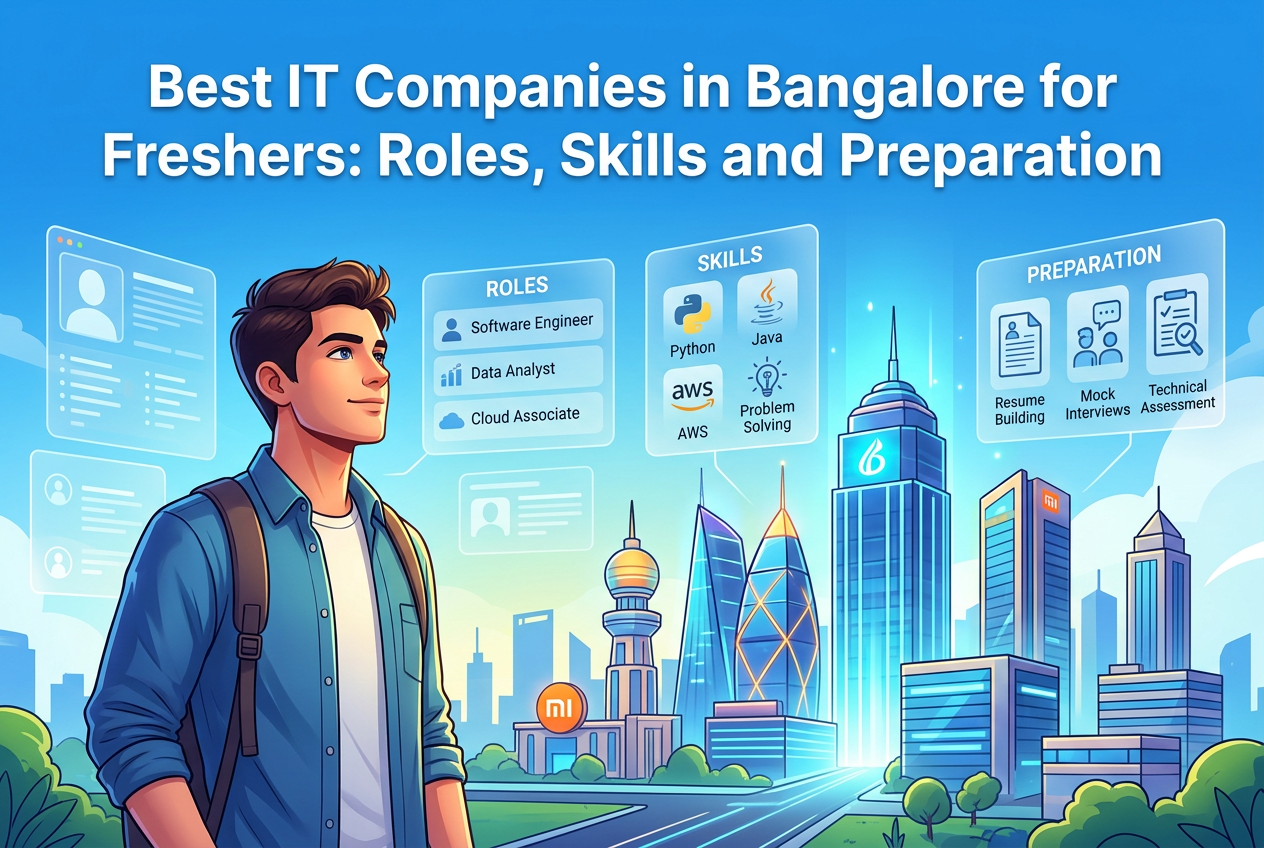
Bangalore is home to organisations working in software development, IT services, consulting, cloud computing, analytics and artificial intelligence. For graduates entering the job market, this creates a range of possible career paths. However, identifying suitable employers requires more than searching for a list of company names.
Freshers need to understand the roles available, the skills those roles require and the recruitment processes used by different employers. A focused approach can make the job search more organised and help candidates prepare more effectively.
Understanding Entry-Level IT Roles
The technology sector includes several types of entry-level positions. Each role requires a different combination of technical knowledge, problem-solving ability and communication skills.
Software developer
Junior developers may work on coding, testing, debugging and maintaining applications. Common requirements include programming fundamentals, data structures and the ability to understand existing code.
Data analyst
Data analysts work with datasets to identify trends, prepare reports and communicate findings. Depending on the employer, relevant skills may include SQL, spreadsheets, Python, statistics and dashboard tools.
Software tester
Testing roles involve checking whether software behaves as expected, documenting defects and helping teams improve quality. Some positions focus on manual testing, while others require automation skills.
IT support and infrastructure
Support roles may involve troubleshooting user issues, maintaining systems and assisting with networks or cloud-based tools. Communication and systematic problem-solving are important alongside technical knowledge.
Candidates should read individual job descriptions because titles and requirements vary between employers.
How to Research IT Companies in Bangalore for Freshers
Start by identifying organisations that recruit for the type of role you want. Review official careers pages, verified job listings and company information to understand their business areas and current vacancies.
When comparing opportunities, examine:
- Required skills and educational qualifications.
- Whether the role is open to fresh graduates.
- The location and work arrangement.
- The responsibilities listed in the job description.
- The application process and any assessment stages.
- The employer’s stated terms of employment.
Do not assume that every large IT company is hiring for every role at all times. Vacancy availability changes, so candidates should confirm the details of individual listings before applying.
Building Relevant Technical Skills
The best preparation depends on the target role.
Software development candidates should practise programming, debugging and basic problem-solving exercises. Data analyst candidates can work on SQL queries, data cleaning, spreadsheet analysis and visualisation. Testing candidates should understand test cases, defect reporting and software testing fundamentals.
Candidates should prioritise the skills that appear repeatedly in relevant job descriptions rather than trying to learn every available technology.
Why Projects and Portfolios Matter
Projects give candidates an opportunity to demonstrate how they apply what they have learned.
A developer might build a small application and explain its design choices. A data analyst might analyse a public dataset and present findings through a report or dashboard. A tester might prepare test cases for a sample application and document the issues identified.
Projects should be genuine and clearly explained. Candidates need to understand their own work and be prepared to answer questions about the methods, decisions and limitations involved.
Preparing for Recruitment
Recruitment processes vary, but candidates may encounter resume screening, aptitude assessments, technical interviews, coding exercises or discussions about previous projects.
A practical preparation plan includes reviewing core concepts, practising common problems, explaining projects aloud and preparing examples of teamwork or problem-solving.
Mock interviews can help candidates identify gaps and become more comfortable communicating their reasoning. Candidates should also prepare questions about the role, responsibilities, work expectations and training arrangements.
Considering Training and Career Support
Some freshers choose structured training to strengthen their technical foundations before applying for jobs. When evaluating a course, review the syllabus, practical exercises, instructor support and total fees.
Career services may include resume guidance, mock interviews and job-search preparation. These services can support readiness, but they do not guarantee a job offer.
Students researching NUCOT placement reviews or other training providers should examine what the program actually offers and distinguish training support from employment guarantees. They should confirm current terms directly with the provider.
Avoiding Common Job-Search Mistakes
Applying to every vacancy without checking the requirements can waste time. Candidates should tailor their resumes to relevant skills, ensure their project descriptions are accurate and keep track of applications.
They should also be cautious of offers that request inappropriate payments in exchange for a job guarantee or fail to provide clear employment terms. Verify recruiters and vacancies through appropriate official channels.
Conclusion
Finding suitable IT companies in Bangalore for freshers involves identifying relevant roles, understanding employer requirements and building demonstrable skills. A focused job search supported by projects, interview practice and accurate applications is more useful than relying on company lists alone.
Freshers should research current vacancies, prepare for the requirements of each role and evaluate training or career support carefully. Consistent preparation and realistic expectations can help candidates approach the entry-level technology job market with greater confidence.