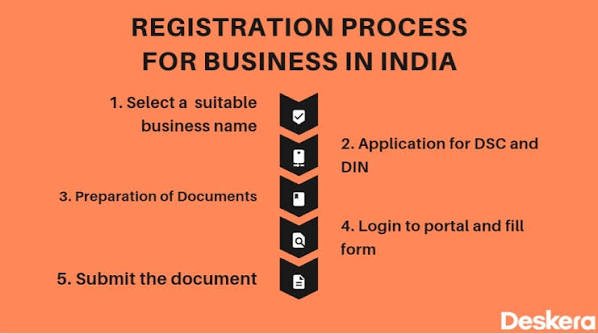
Introduction
Many small business owners run informally for months, unsure when — or how — to make things official. Knowing how to register a small business properly protects you legally and opens doors to loans, credibility, and growth that informal operations simply can’t access.
Why Registration Matters More Than It Seems
Quick answer: Learning how to register a small business matters because it protects personal assets, builds customer trust, and makes you eligible for loans, government schemes, and formal business banking.
Step 1 — Choose the Right Business Structure
- Sole Proprietorship — simplest, minimal paperwork, but no separation between personal and business liability
- Partnership — for businesses with two or more owners sharing responsibility
- LLP (Limited Liability Partnership) — offers liability protection with moderate compliance
- Private Limited Company — best for businesses planning to raise investment or scale significantly
Step 2 — Register for Udyam (MSME) Registration
This free, straightforward registration gives small businesses in India access to government schemes, easier loans, and added credibility with customers and vendors.
Step 3 — Get a GST Registration if Applicable
Required once turnover crosses the threshold, or if you’re selling across state lines or through e-commerce platforms. It also allows you to claim input tax credits.
Step 4 — Open a Dedicated Business Bank Account
Picture running a business for a year using a personal account, then struggling to prove business income for a loan application — a dedicated account avoids this entirely.
Step 5 — Understand Local Licensing Requirements
Depending on your business type — food, retail, manufacturing — local municipal licenses or trade permits may be required before you can legally operate.
Step 6 — Keep Basic Compliance Records
Even simple businesses should track invoices, expenses, and any tax filings required for their structure. This saves major headaches during audits or loan applications later.
Step 7 — Consult a Professional for Complex Structures
For anything beyond a simple sole proprietorship, a brief consultation with a chartered accountant or company secretary avoids costly mistakes down the line.
Common Registration Mistakes New Owners Make
- Delaying registration for too long, missing early credibility benefits
- Choosing the wrong business structure for their actual growth plans
- Mixing personal and business finances even after registering
- Ignoring GST requirements until forced to comply
[link to related guide about getting your first 100 customers here]
FAQ
Do I need to register my business immediately when starting? Not always immediately, but registering early — especially Udyam — builds credibility and access to support sooner.
What’s the easiest business structure to register in India? Sole proprietorship is simplest, though it offers no separation between personal and business liability.
Is GST registration mandatory for all small businesses? Only above a certain turnover threshold, or for specific categories like inter-state sales and e-commerce.
What are the benefits of Udyam (MSME) registration? Easier access to loans, government schemes, and added credibility with customers and vendors.
Should I consult a professional before registering my business? For anything beyond a basic sole proprietorship, yes — it helps avoid structural mistakes that are costly to fix later.
Conclusion
Registering your business isn’t just paperwork — it protects you legally and unlocks real opportunities like loans and government support. If you’ve been operating informally, take the first step this month with a simple Udyam registration; it’s free and surprisingly quick.