Water plays a bigger role in everyday life than most of us realize. At home, we depend on it for drinking, cooking, bathing, and keeping appliances running smoothly. In a business, water can influence everything from customer satisfaction to equipment performance and daily operating costs. When something changes, whether it’s an unusual taste, mineral buildup, or concerns about water safety, finding the right solution becomes important.
The difficulty is knowing where to begin. Water problems can have several causes, and a treatment method that works well for one property might be completely unsuitable for another. A little testing, some practical guidance, and a better understanding of available technologies can make the decision much easier.
Start by Understanding What’s in Your Water
Before investing in treatment equipment, take time to understand the water entering your property. Municipal supplies are generally treated and monitored, but mineral content, taste, and other characteristics can still vary. Private wells have different considerations because groundwater quality depends on local geology, nearby land use, and environmental conditions.
Some problems are easy to notice. White deposits around faucets may indicate hard water, while reddish stains can sometimes be associated with iron. An unpleasant chlorine taste may affect drinking water, and sediment can collect in fixtures or interfere with equipment. Other concerns, however, aren’t visible at all.
Water testing helps distinguish between these possibilities. Depending on the source and the concern, testing may examine hardness, pH, iron, dissolved solids, bacteria, or specific contaminants. A basic screening test has its place, but it cannot establish whether water is safe from every potential contaminant. Health-related concerns may require analysis by a certified laboratory.
Once you have reliable results, it becomes easier to choose equipment based on actual needs rather than broad marketing claims.
When Ultraviolet Treatment Makes Sense
Microbiological concerns require a different approach from ordinary taste, odor, or mineral problems. If testing identifies a bacterial or other microbial concern, treatment may need to focus on disinfection rather than conventional filtration alone.
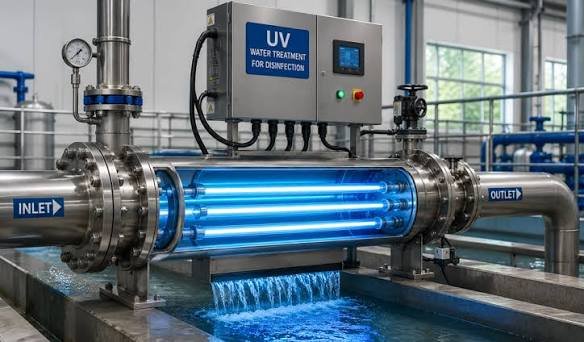
UV water disinfection systems use ultraviolet light to inactivate susceptible microorganisms as water passes through a treatment chamber. They can be useful in appropriately designed installations, including certain private-well applications, where microbial control is needed. Unlike chemical disinfection methods, UV treatment does not rely on adding a disinfectant to the water.
There are important limitations, though. UV systems do not remove dissolved minerals, sediment, or chemical contaminants. Water generally needs suitable clarity for the light to work effectively, so prefiltration may be necessary. The unit must also be sized correctly for the flow rate, and its lamp and other components require maintenance according to the manufacturer’s instructions.
UV treatment should be selected in response to testing and the property’s particular circumstances. It is not automatically necessary for every household, and it should not be treated as a replacement for other treatment methods when several water-quality concerns are present.
Why Some Water Problems Need Specialized Filtration
A common mistake is assuming that every filter performs essentially the same job. In reality, filter media and system designs differ considerably. A sediment filter can capture suspended particles, while activated carbon can reduce certain tastes, odors, and selected compounds. Other technologies target particular dissolved substances or treatment challenges.
For water with unusual characteristics, specialty water filters may provide a more targeted solution. These products are designed for specific applications, so their suitability depends on the substance being addressed, the water conditions, and the manufacturer’s verified performance claims.
For example, a household experiencing iron staining may need a system designed to reduce iron rather than a general-purpose cartridge. A property with elevated hardness may benefit from a water softener, while drinking water containing certain dissolved substances might call for a properly certified reverse osmosis unit. These options are not interchangeable, and combining technologies should only be considered when the results justify it.
When comparing products, look beyond the number of filtration stages or the appearance of the equipment. Ask which substances the system is designed to reduce, whether independent certification supports those claims, and how performance may change as the filter reaches the end of its service life.
Commercial Properties Have Different Water Demands
Businesses often use water in ways that create requirements beyond those of a typical home. Restaurants need suitable water for food preparation and beverages. Hotels may be concerned about scale in boilers, laundry equipment, and bathroom fixtures. Manufacturing facilities may need water that meets specific process requirements.
In these settings, commercial water treatment systems must be selected according to water quality, daily demand, operating conditions, and the intended use. A system that performs adequately in a small office might struggle when several outlets operate simultaneously in a restaurant or production facility.
Flow rate deserves particular attention. Undersized equipment can restrict water delivery during busy periods, while poorly matched treatment technology may fail to address the original concern. Businesses should also consider installation space, drainage, electricity requirements, and how easily equipment can be serviced without disrupting operations.
Maintenance planning matters just as much as the initial installation. Replacement filters, cleaning, inspections, and periodic testing all contribute to the total cost of ownership. Establishing a service schedule can help reduce unexpected downtime and make performance easier to monitor.
Commercial operators should also identify any applicable health, safety, or industry requirements before choosing equipment. The appropriate specifications depend on the business and the way water is used.
Installation and Maintenance Should Never Be an Afterthought
Even suitable equipment may deliver disappointing results if it is installed incorrectly or neglected. Systems need to be sized for the property’s water demand, connected according to manufacturer requirements, and positioned where routine servicing is practical.
Before installation, ask for a clear explanation of the work involved. Find out whether additional plumbing, drainage, electrical connections, or pretreatment will be needed. A written estimate should distinguish equipment costs from installation charges and explain any ongoing service requirements.
Once the system is operating, follow the recommended maintenance schedule. Filters and membranes need replacement, softeners require routine attention, and UV equipment needs checks to ensure its components continue to function properly. Keep records of service dates and water-test results so changes are easier to identify.
If water develops a sudden change in taste, color, or odor, investigate the cause instead of assuming the treatment system is responsible. Changes in the supply or plumbing can also affect water quality.
Make a Decision Based on Evidence
Choosing water treatment doesn’t have to become an overwhelming project. Begin with the water source, identify the concerns that matter, and arrange appropriate testing when necessary. Then compare solutions according to verified performance, installation requirements, maintenance needs, and long-term costs.
Be cautious of promises that a single device can solve every water problem. Different concerns require different approaches, and no system should be expected to remove substances it was not designed to address.
Whether you’re improving drinking water at home or managing a high-demand commercial property, the goal remains the same: choose a practical solution that fits the actual conditions. With reliable information, suitable equipment, and consistent maintenance, water treatment becomes a manageable investment in everyday comfort, dependable operations, and long-term peace of mind.